
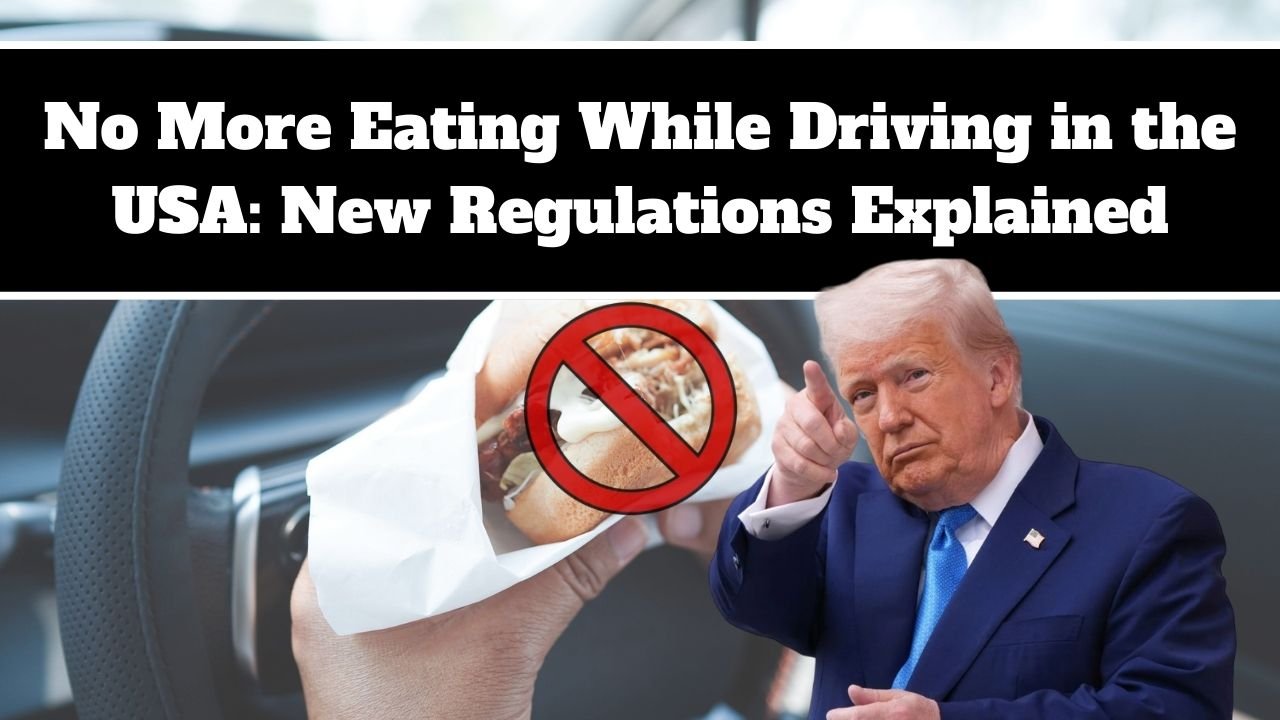
Across the US, a large shift in road safety enforcement is reshaping normal using habits. What was once taken into consideration a harmless habitual—grabbing a coffee or consuming a quick meal at some stage in the go back and forth—is now increasingly more regarded via government as a extreme protection danger. As 2025 progresses, consuming and ingesting in the back of the wheel are being reclassified as “guide distractions,” setting them in the equal enforcement class as texting even as riding.
Federal and country agencies argue that these measures are important to address stubbornly excessive crash prices linked to distracted riding. According to National Highway Traffic Safety Administration, activities involving food and beverages can boom crash threat by as lots as 80 percentage after they divert a driver’s attention at important moments.
How Distracted Driving Laws Have Expanded
For a few years, distracted driving regulation centered almost entirely on cellular telephones. Hands-unfastened mandates, texting bans, and dashboard digital camera enforcement were anticipated to significantly lessen injuries. While these measures helped, traffic fatality numbers eventually leveled off, prompting regulators to appearance beyond phones.
Crash investigations found out a steady pattern: ingesting while using became found in almost one in five distracted-driving-associated incidents. As a result, lawmakers started broadening present “Move Over” and “Due Care” statutes. These laws now empower cops to issue citations on every occasion any hobby—along with preserving meals or a drink—interferes with safe automobile operation.
Understanding the New Graduated Penalty System
Public attention has centered on reports of fines achieving $10,000. However, officers emphasize that such penalties observe handiest within the maximum extreme instances. Most states now observe a graduated penalty version that escalates primarily based on behavior and effects.
The highest consequences are normally applied while ingesting is cited as contributing proof in charges inclusive of vehicular endangerment or homicide by way of vehicle.
Why Eating Behind the Wheel Is Now Treated Seriously
Law enforcement organizations argue that ingesting combines three forms of distraction that are as dangerous as cellular phone use.
Visual distraction occurs whilst drivers look away to unwrap meals or search for napkins. Manual distraction takes place while one or both palms go away the steerage wheel. Cognitive distraction arises when interest shifts in the direction of heading off spills or chewing in preference to monitoring visitors.
Research from the Insurance Institute for Highway Safety suggests that drivers who devour whilst using are three times more likely to experience near-leave out incidents. Sudden spills—particularly hot beverages—can dispose of reaction time absolutely, dramatically increasing crash severity.
State-with the aid of-State Enforcement Differences
There is no single federal statute banning consuming even as using. Instead, states are making use of present legal guidelines greater aggressively, creating a patchwork of enforcement standards.
West Coast Enforcement Trends
In California, authorities increasingly more apply reckless driving statutes to food-related distractions. Observations through the California Highway Patrol suggest that drifting into bike lanes or failing to yield while consuming can result in fines reaching $1,000, along with license points.
East Coast “Due Care” Laws
States consisting of New York and New Jersey have strengthened due care requirements. These policies allow officials to stop drivers totally for behaviors that put off attention or palms from the wheel, making eating a number one offense.
High-Penalty States
In Alaska, distracted using that ends in a crash can be charged as a misdemeanor, sporting fines up to $10,000 and capability prison time. Oregon additionally enforces highest base fines in the country, starting near $1,000 even with out a collision.
Real-World Penalties and Impacts
The high-end fines of up to $10,000 do now not observe to each motive force caught eating while using. Rather, they’re normally reserved for irritated cases, together with while that distraction contributes at once to an twist of fate inflicting injury or demise.
Even so, penalties can climb rapidly:
- Minor distraction citations often start at a few hundred dollars plus license points.
- Repeat offenses or reckless classifications may result in fines well into the thousands and might include mandatory traffic safety courses or probation terms.
- Civil and criminal implications — especially when accidents occur — can involve court appearances, insurance premium increases, and significant long-term consequences for driving records.
Changing Driver Behavior
Officials emphasize that these rules aren’t meant to punish drivers unfairly, but to store lives by way of doing away with preventable distractions. Road safety advocates offer sensible recommendation: stop in a secure place if you need to eat or drink, use particular relaxation regions while on lengthy journeys, and put together meals before starting your journey.
Conclusion
The shift in enforcement toward penalizing ingesting in the back of the wheel displays a broader dedication to decreasing distracted driving throughout the United States. Although no federal regulation outright bans eating even as riding, states are increasingly more decoding existing statutes — such as reckless or careless operation — to include moves that divert interest from the road. With penalties attaining as much as $10,000 in critical cases, drivers are being reminded that full cognizance on the street isn’t always simply a recommendation, but an expectation of accountable riding. By understanding the risks and adapting behavior thus, motorists can guard themselves, others on the road, and their wallets from the effects of preventable distraction.